Background
The data integrity team at my firm is a responsible for the accuracy of client data. They maintain the core client data such as name, phone, address, and relationships with others. Data accuracy is critical for client services such as reporting and accounting and invaluable for sales to ensure proper coverage. Multiple applications along with automated data integrations modify client data stored in a centralized location. On average 4400 firm, 2800 office, and 14000 person changes come through daily.
Problem Statement
Client Data was running multiple queries to the database in order to determine data inconsistencies. The process was slow and difficult to track progress. They needed a place to manage data conflict errors. They also needed to be able to manage data in bulk such as mass email changes. The business process they followed was to use the CRM to check data and make updates one at a time which was horribly inefficient. Some on the team had permission to make data updates directly in the database which could result in data issues if data was not properly validated.
My Role
I was product manager for the built out of a web application called Data Management Toolkit. It would serve as a tool for Client Data to manage data quality such as inconsistencies and bulk changes. I met with the business product owner to talk through their current process to identify pain points, and outlined features in an application that would meet their needs. I involved engineering early to gain deep understanding of the business in order to be able to determine a technical solution and logical phases of the build out along with timing. I maintained transparency with my business partner as the project progressed.
Summary
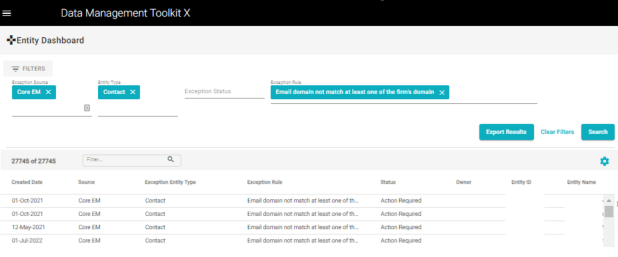
The application is called Data Management Toolkit (DMT) and is a suite a tools including a data quality dashboard, bulk data update tools, data merge tools, and analytics to track team progress. The data quality dashboard allowed the client data flagged from any of our 50+ validations to be searched, assigned for review, in some cases actioned, and follow a workflow to closure. Sometimes there are duplicate firms or people added to the system even though we have several checks in effort to prevent it. DMT has five different tools to merge various types of client data. Each merge includes over 30 complicated data checks that must pass before the data is merged. Once past checks the tools then merge duplicate records without losing critical data and notifies downstream systems of the merge. There are a dozen tools to allow Client Data to update large sets of data in bulk. Some examples are creating contact records and updating email domains.
Outcome
This powerhouse tool is massive in reach and required thorough testing and large amounts of interaction with other business and engineer teams to ensure validations were accurate and merges did not negatively impact processes. The stakes were high and any small slip up could result in an operating event. The diligence paid off and the tool is considered invaluable to the firm.
I am so proud of this tool and the hard work that went into it coming to life. It took time to convince the right people that the business needed a tool like this. The data updates are safer, more efficient, and frankly less painful for the business while greatly reducing regulatory or reputational risk to the firm.
 Lisa Mirecki