Business Case
I work for an organization with global presence and headquartered in New York City. They have a fabulous program for interns and recent university graduates. The goal of the program is to hire smart, enthusiastic people interested in the FinTech sector and introduce them to many aspects of the business through four six-month rotations to different teams. At the end of the journey they choose a team for their more permanent home. Internal mobility truly is encouraged so hopefully not forever forever.
Problem Statement
I was tapped by the head of our division to lead the Seattle program. He was looking to improve the full-time rotational analysts we hire as we noticed people sometimes backed out of offers or leave after the first year.
My Role
I was charged with recruitment, onboarding, team rotation decisions, regular meetings with interns/analysts and their managers, and ultimate placement decisions. I decided to target hiring top quality interns and focus energy into a making a successful summer. The rationale being the higher percentage of interns I can convert to full-time analysts the better likelihood of candidates accepting an offer and staying on with the firm the entire two years.
Summary
I had assistance from partner in crime, Mike, and we enlisted cross-functional groups of people in our org as recruiters. We attended job fairs at three local universities. From those events we generated lots of local talent. I worked with HR recruiting at my firm to organize interview events at the university and in office which included hiring loops, lunch, and an office tour. In two summers we had 9 intern spots filled with a nice mix of undergrad and graduate students.
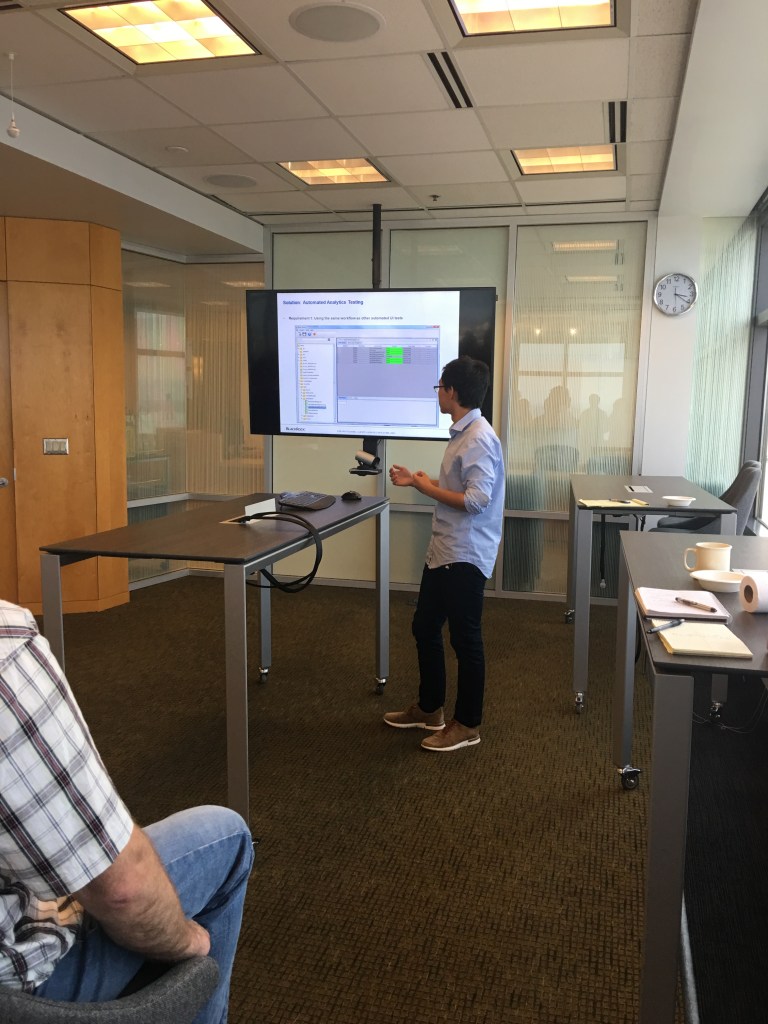
The summers were a success with the interns being welcomed with brunch to follow their orientation meetings, exciting intern projects, final project presentations, happy hours and outings to help them be a significant part of the team and enjoy all that Seattle has to offer. I also planned several learning sessions to introduce them to Java, Angular, the financial business, and SDLC.
In the fall, I welcomed the interns in as rotational analysts. I met with each one regularly to track how their experience was going. I also met with their managers to learn if there were any opportunities for growth to focus on in my sessions with their analyst. I organized more learning sessions to deepen their software engineering and financial understanding. I often tapped analysts to run office events as a way to improve their visibility and build their brand.
Outcome
Of the nine interns over two years, seven were offered positions and four accepted working out to be 57% retention. Similarly, I supervised nine rotational analysts in that time, seven completed their two years with the company (78% success rate) and the remaining three left after their first year.
Internal Mobility being an emphasis at the firm, several transitioned to different offices for their second year. The program ended in Seattle when it was modified to only be in three US offices.
Learning
I love working with young professionals! They truly are the future and their energy and attitude is infectious and bring so much life to me and the firm. I wish I could bottle it. Although the program evolved away from a Seattle presence it was a valuable experience to learn about HR recruiting including interviewing, making job offers, and the innerworkings of other teams. I was surprised by the onboarding experience as new hires are not able to code for at times several weeks. Luckily, that experience has greatly improved!
Most importantly, I gained the understanding of wearing multiple hats at my firm. At times I wanted to wear my Seattle office hat and keep analysts here in Seattle but I learned to put on my firm-wide hat to support the analyst’s overall satisfaction and experience with the firm with the goal of positive retention.
 Lisa Mirecki